Key takeaways
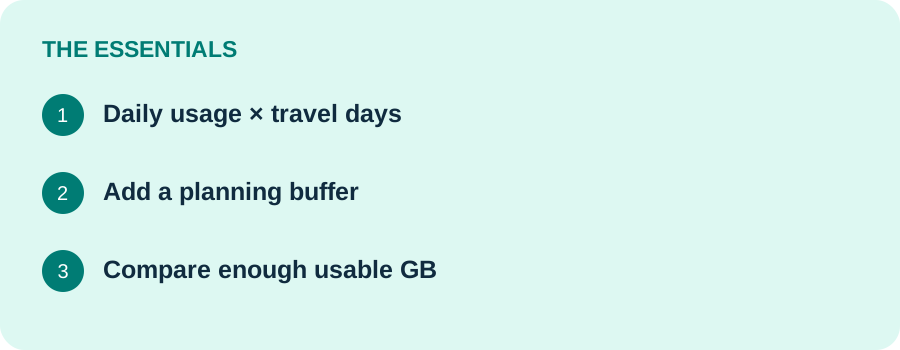
- Daily usage × travel days
- Add a planning buffer
- Compare enough usable GB
An eSIM data plan should cover your expected daily internet use multiplied by trip length, plus a small buffer for unexpected needs. The amount of eSIM data you need depends on what you do online, how many travel days you have and how often you can use Wi-Fi. Messaging and basic navigation are comparatively light activities, while video streaming, cloud uploads and laptop hotspot use can consume much more. A good estimate starts with your daily habits rather than the largest package advertised.
A practical way to calculate a travel data allowance is to estimate average daily use, multiply it by the number of days and add a reasonable buffer. This method does not predict exact consumption, but it provides a transparent basis for comparing plans.
How Much Does an eSIM Data Plan Need per Day?
An eSIM data plan for daily travel use can be budgeted at illustrative light, moderate or heavy levels, then adjusted to your real applications. A traveler using a phone mainly for maps and messages may need only a few hundred megabytes per day. Someone browsing social media, sending photos and making occasional calls can use considerably more. Heavy video consumption or remote working may exceed several gigabytes daily.
For planning purposes, consider three illustrative usage profiles.
| Travel profile | Daily budget | Typical activities |
|---|---|---|
| Light | 0.25 GB | Messages, maps, occasional browsing |
| Moderate | 0.75 GB | Navigation, social media and some uploads |
| Heavy | 2 GB | Frequent video, cloud use or hotspot activity |
These figures are assumptions for a calculator, not measured average data use. Application settings, image quality, video resolution and background tasks can change the result substantially. Travelers should customize the estimates to match their own behavior.
Data needs should be estimated from your habits rather than from the number of vacation days alone. If a phone is mainly used to find restaurants and message family, the connection may consume little cellular traffic between Wi-Fi sessions. If another traveler regularly watches high-resolution video, the same number of days can require a much larger allowance. Start by reviewing cellular-data usage in your current phone settings. Remember that a typical workday may be very different from a day of sightseeing, so divide the itinerary into realistic activity types.
eSIM Data Plan for 7, 10 and 14 Days: How Many GB?
For a 7-, 10- or 14-day eSIM data plan, multiply a realistic daily estimate by travel days and add a buffer rather than choosing by trip length alone. A useful package should cover expected consumption plus a small safety margin. The table below multiplies each illustrative daily budget by the trip duration and includes a 20% buffer. Package suggestions are rounded upward to convenient data sizes rather than based on any particular provider's current offers.
| Trip duration | Light use | Moderate use | Heavy use |
|---|---|---|---|
| 7 days | 2.1 GB → consider 3 GB | 6.3 GB → consider 7–10 GB | 16.8 GB → consider 20 GB |
| 10 days | 3 GB → consider 3–5 GB | 9 GB → consider 10 GB | 24 GB → consider 25 GB |
| 14 days | 4.2 GB → consider 5 GB | 12.6 GB → consider 15 GB | 33.6 GB → consider 35–40 GB |
These are illustrative calculations, not recommendations for every traveler. A person who rarely streams and regularly uses hotel Wi-Fi may need less. A creator uploading large videos or a worker using tethering can consume more.
Example for a mixed itinerary: imagine five days of light sightseeing at 0.3 GB a day and four days with video calls at 1.2 GB a day. The combined estimate is 1.5 GB plus 4.8 GB, or 6.3 GB before a buffer. With 20% additional capacity, the planning target becomes approximately 7.6 GB. This is a hypothetical budgeting scenario, not a claim about typical app consumption. A traveler can choose the nearest suitable real package once its coverage, price and validity are verified.
Build a realistic data budget
1Daily use
Estimate your own maps, messaging, browsing and video use.
2Shared devices
Add laptop and other hotspot traffic.
3Offline preparation
Download maps and entertainment before leaving.
4Buffer
Allow a margin and check top-up availability.
How Do You Calculate an eSIM Data Plan?
Calculate an eSIM data plan as daily GB multiplied by days and a buffer factor, then round up to a suitable purchasable allowance. Calculate your personal estimate by multiplying your expected daily use by your trip length, then adding a buffer. The buffer helps account for unexpected navigation, transport changes or additional communication. It should not replace a realistic estimate of heavy activities.
Required data = estimated daily GB × travel days × 1.2
For example, suppose you expect to use 0.6 GB daily on a 10-day trip. The baseline requirement is 6 GB. Adding a 20% margin produces 7.2 GB, suggesting that an 8 GB or 10 GB package would be worth comparing.
A calculator should also let users add occasional large tasks separately. A single long video upload may be more important than several days of ordinary messaging.
The useful distinction is between transfers the traveler intentionally starts and those running in the background. Video streaming is obvious and adjustable through quality settings, but cloud photo backup or operating-system updates can consume significant capacity without deliberate action. Inspect which apps have permission to use cellular data. Turn off unnecessary high-volume synchronization while traveling, especially when your allowance is small. Recording the balance before and after a long journey can also reveal which activities are responsible for unexpected usage.
Which Activities Use the Most Mobile Data?
The heaviest uses of an eSIM data plan are generally video, cloud transfers, long calls and laptop sharing, not ordinary text messaging. Data consumption depends on how applications transfer content. Text messages and simple navigation generally use relatively little data, while high-resolution video, large downloads and live meetings use much more. Automatic backups can also create unexpected consumption.
Maps and Navigation
Maps use a relatively small share of many eSIM data plan budgets, especially when offline areas are downloaded over Wi-Fi. Maps usually require less data than video streaming, particularly when route information is downloaded in advance. However, live traffic, frequent searches and map-image downloads can increase usage. Offline map downloads should be completed using reliable Wi-Fi whenever possible.
Social Media
Social media can consume a large portion of an eSIM data plan when short videos autoplay or photos upload at high resolution. Social media usage varies considerably by content type. Viewing short videos can consume much more data than reading posts or sending messages. Automatic video playback can increase consumption even during casual browsing.
Video Calls
Video calls require sustained data on an eSIM data plan, so budget for expected meeting time instead of grouping them with text chat. Video calls require sustained mobile-data transfer in both directions. Consumption depends on resolution, network adaptation and call duration. Travelers joining long meetings should budget separately for this activity rather than treating it as ordinary messaging.
Streaming and Downloads
Streaming and large downloads can exhaust an eSIM data plan quickly, so prepare media over Wi-Fi whenever possible. Streaming video, cloud backups and large file downloads are among the heaviest typical uses. Higher video quality generally requires more data. Downloading entertainment before departure can significantly reduce cellular consumption.
Hotspot and Laptop Use
A laptop hotspot can consume an eSIM data plan unexpectedly through updates, cloud backup and background synchronization. Laptop traffic is often less predictable than phone traffic because background updates and synchronization can consume data. A hotspot can also connect several devices simultaneously. Business travelers should check both data allowance and tethering permissions.
Offline maps can make navigation more economical, but they require preparation. Download the relevant city or region while using dependable Wi-Fi, then confirm that the map is saved on the device. Live traffic, online place searches and certain transit features can still require a connection. If the trip includes rural driving, store accommodation addresses, route notes and fuel-stop information separately. The goal is not to eliminate cellular data, but to keep essential travel functions useful when service is absent or expensive.
Is 1 GB Enough for a Trip?
A 1 GB eSIM data plan can suit a very short light-use period, but it is unlikely to cover a full week of moderate activity. One gigabyte can be enough for a short period of light use, such as messages and occasional maps. It may be insufficient for a full week with frequent social media or video. The correct answer depends on the duration and activities.
For example, a traveler who uses 0.25 GB per day would need about 1.75 GB over seven days before adding a buffer. A 1 GB package would fall short in that scenario. The comparison should use expected consumption rather than duration alone.
How to read the results: a recommendation of 5 GB does not mean that a package displaying 5 GB is automatically appropriate. It must also cover the full itinerary, permit the required applications and remain valid through the final day. A larger allowance with only five days of validity will not solve a two-week trip. Equally, a 30-day plan with suitable capacity may be unnecessary for a weekend. Treat the data budget as one eligibility filter alongside coverage and service features.
Is 5 GB Enough for a Week Abroad?
A 5 GB eSIM data plan can be sufficient for a week of light use with Wi-Fi, but frequent streaming or video calls may exceed it. Five gigabytes can be sufficient for a week of moderate or light usage, especially when accommodation Wi-Fi is available. At an average of 0.6 GB per day, seven days would consume approximately 4.2 GB before a buffer. However, repeated video calls or large uploads could exceed the allowance.
Travelers should consider whether the package supports additional data purchases. A plan that can be topped up conveniently may reduce the need to overbuy. Check the conditions before relying on that option.
How much data should you plan for?
A simple planning estimate, based on your own expected use.
Do You Need More Data for Multi-Country Travel?
A multi-country eSIM data plan needs explicit coverage in every destination; crossing a border does not inherently consume extra gigabytes. Not necessarily. Moving between countries does not inherently increase consumption, but it can create more navigation, reservations and transport coordination. The most important question is whether the selected regional package includes every destination and remains valid for the whole trip.
For a multi-country European itinerary, a regional package may be convenient. However, territory exclusions can matter. Country coverage and data volume must be checked separately.
For travelers using a phone as a modem, the receiving laptop should be configured separately. A metered Wi-Fi setting can reduce updates on some systems, but it does not guarantee that every application will obey the preference. Consider pausing automatic backups and downloading presentations before connecting over cellular. Shared hotspots also distribute one allowance across multiple devices; each additional phone or laptop can change the budget. Check tethering terms before assuming the selected mobile subscription permits this use.
Find the right eSIM for your trip
Compare prices, coverage, data allowances and validity in one place. Choose a plan that fits your journey, not just the lowest advertised price.
How Can You Make a Smaller Data Plan Last Longer?
To extend an eSIM data plan, reduce automatic video playback, download maps on Wi-Fi and monitor background app traffic. A smaller allowance can last longer when unnecessary background traffic is reduced. Download maps, music and entertainment before traveling. Configure cloud backups and major application updates to use Wi-Fi.
Monitor cellular usage through the phone's settings and the package's balance information when available. On iPhone, Low Data Mode can reduce certain background activity. Similar features exist on many Android devices.
Reducing a few high-volume activities often saves more data than restricting ordinary messages or maps.
What Should a Travel Data Calculator Include?
A useful eSIM data plan calculator asks for days, maps, social video, calls, hotspot use and Wi-Fi availability before recommending capacity. A useful calculator should ask for trip duration, navigation usage, social media, video calls, streaming, hotspot requirements and Wi-Fi availability. It should show the assumptions used rather than producing a mysterious single number. The final recommendation can be rounded to common package sizes.
toptravel esim can then display suitable plans from its dynamic catalog using the calculated budget. The result should clearly distinguish estimated data needs from verified commercial offers. An eSIM data plan calculator is only a budgeting tool until a real package has confirmed network coverage and validity.
A Quick Data Worksheet You Can Adjust
Build an eSIM data plan from actual habits: record travel days, planned video-call hours, map use, social scrolling, hotspot needs and expected hotel Wi-Fi. Multiply your daily estimate by travel days and add a 20% planning buffer, then round upward to an available package. These are user-entered estimates rather than carrier-measured guarantees, so checking usage after the first day remains valuable.
Frequently Asked Questions
These answers show how an eSIM data plan estimate changes with trip duration, applications and access to Wi-Fi.
How much eSIM data do I need for 7 days?
For seven days, choose an eSIM data plan according to activity: light users may need only a few GB, while heavy streamers can need much more. Light users may need only a few gigabytes, while moderate users may require more. Video streaming and hotspot use can increase consumption substantially. Estimate daily activity and add a buffer.
Is 3 GB enough for 10 days?
A 3 GB eSIM data plan may last ten days for very light use, but it can run out quickly with frequent video or uploads. It can be enough for very light use with frequent Wi-Fi access. At 0.25 GB daily, ten days would consume about 2.5 GB before a buffer. More intensive use may exceed 3 GB.
Is 10 GB enough for two weeks?
A 10 GB eSIM data plan may cover two weeks of light use, although moderate use can exceed it without hotel Wi-Fi. It can suit some moderate travelers, especially with hotel Wi-Fi. At 0.75 GB daily, 14 days would use 10.5 GB before a buffer, so this example would need more. Individual activity matters.
Does GPS use mobile data?
GPS location positioning itself needs no continual cellular transfer, but an eSIM data plan carries online maps, live traffic and searches. GPS positioning itself does not require continuous internet access, but maps, traffic data and online searches may use mobile data. Downloading offline maps reduces dependence on a connection.
Should I buy unlimited data instead of calculating usage?
Before replacing an eSIM data plan with unlimited data, compare its realistic cost and any limits on full-speed usage. Not automatically. Unlimited plans can have high-speed limits and fair-use restrictions. Compare your expected consumption with the actual policy and price.
My quick checklist
Tick off the checks you have completed. Your choices stay in this browser.
0 of 3 checked
Official device support
Menu names and availability can vary by device, software and market. Consult current manufacturer instructions for your exact model.