Key takeaways
- Compare the entire trip cost
- Keep voice and data separate
- Check day-pass triggers
An eSIM vs international plan comparison should start with the cost of the whole trip, not the price printed beside a single day or gigabyte. A separate travel eSIM generally provides a prepaid allowance, while international service on your existing line follows your carrier's overseas roaming terms. The cheaper option is the one that covers every required day, destination and function without unnecessary charges.
A traveler who only needs maps and messages can reach a different decision from somebody who requires regular cellular calls to a US number. Comparing an eSIM vs international plan also means separating the data connection from the voice line that stays active on a dual-SIM phone. Neither connection automatically protects you against charges generated through the other.
eSIM vs International Plan: What Is the Main Difference?
The eSIM vs international plan difference is usually a question of who bills you and what is included. A travel profile is purchased separately from an international provider or local carrier; your home carrier's roaming option extends the existing subscription abroad. Both can technically use a visited country's network through roaming agreements.
| Feature | Separate travel eSIM | Home-carrier international package |
|---|---|---|
| Payment | Commonly prepaid | Included allowance, daily pass, add-on or usage-based |
| Existing phone number | Kept on the home line if supported | Remains attached to home account |
| Calls and SMS | Often excluded from data-only packages | Subject to carrier terms |
| Destination coverage | Explicit list of supported locations | Home carrier's roaming list |
| Validity | Product-specific countdown | Billing cycle or pass-specific clock |
| Hotspot | Must be allowed by selected plan | Must be allowed by home tariff |
A digital SIM is not inherently cheaper, faster or more secure in every situation. Service conditions are the real basis for comparison. Check the underlying network and available data before evaluating price.
A travel data purchase can be provisioned by a specialized international company, a local network or another distributor. The phone's eSIM hardware is simply the storage method. The visitor still registers through a destination operator, sometimes under roaming arrangements. This distinction explains why a digital profile and a traditional carrier pass can show similar signal bars while charging very different prices. The comparison must examine the specific contract, not assume that one method always uses superior radio technology. A voice-capable product and a prepaid internet-only product are not interchangeable when verification calls are required.
How Do Daily Roaming Passes Affect Your Budget?
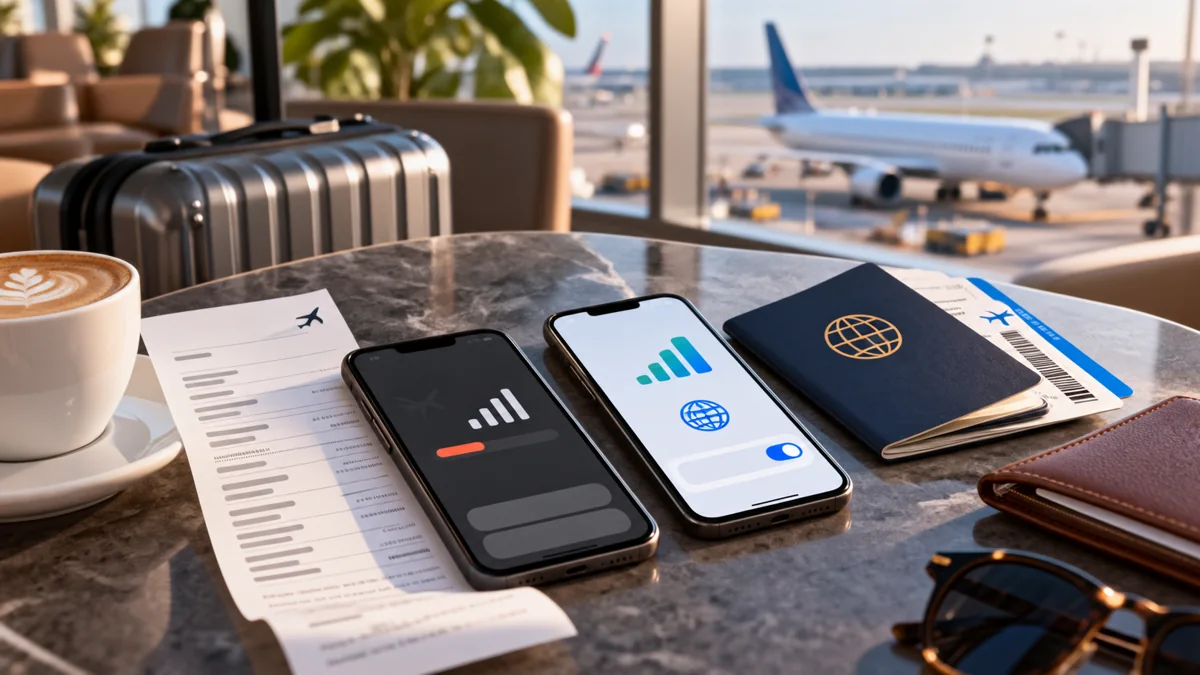
An eSIM vs international plan calculation must account for every day a roaming pass is triggered. Some home subscriptions charge a set amount on each used day, while others include an allowance or offer a monthly travel add-on. Whether a call, text or small background-data request activates the pass depends on the carrier's terms.
For example, imagine a hypothetical $12-per-used-day pass and a nine-day trip. If all nine days trigger the fee, the incremental bill is $108. A hypothetical suitable travel data package costing $27 would be $81 less for data, but the comparison changes if you also need cellular voice or an additional country.
These figures are illustrative, not live carrier prices. Record the exact trigger rules, cap on chargeable days and whether separate international countries are covered before calculating the total.
Daily-pass calculations need attention to the meaning of a billing day. One carrier may start a 24-hour window at first chargeable use, whereas another describes a different period or daily cap. Small background requests can matter if they trigger a charge. Review what happens on overnight flights and at country borders. A traveler who lands at 11 p.m. should understand whether the next morning is charged separately. Record taxes, included data and pass-triggering activities alongside the advertised fee rather than multiplying a headline price without checking the terms.
Two options, different trade-offs
Home-carrier roaming
- May keep your usual voice and SMS services together.
- May already include your destination under your home plan.
Separate travel eSIM
- Can offer a distinct prepaid data allowance.
- Requires checking compatibility, coverage and any home-line charges.
When Is Keeping Your Existing Carrier Better?
The eSIM vs international plan choice can favor the existing carrier when foreign data is already included. This is especially relevant for a short visit under a subscription that offers international access without a new fee. A separate purchase would add cost while doing little to improve the essential service.
Keeping a home line can also simplify ordinary calls, banking SMS and business communication. A traveler with an existing international voice allowance may be better served by that benefit than by buying data-only service and discovering that conventional calling remains chargeable. Always confirm the destination and remaining high-speed allowance.
If a company reimburses international roaming but not third-party connectivity, the personal financial decision may differ again. The objective is complete cost and reliability, not loyalty to a connection type.
An employee who must receive standard calls from customers may place a higher value on continuity than a leisure traveler using internet messaging. Similarly, a short transit may not justify installing a profile at all if airport Wi-Fi meets the need. Verify Wi-Fi security and reliability, however, before planning to depend on it for essential bookings. If the home carrier already provides adequate roaming, buying a separate package can create unnecessary complexity. Consider the service features you actually need rather than treating an additional subscription as automatically beneficial.
When Is Separate Prepaid Mobile Data Cheaper?
The eSIM vs international plan calculation often favors prepaid data for longer vacations when the home subscription charges for most days. A fixed allowance can also make spending easier to predict. It is particularly useful for navigation, messaging, restaurant reservations and ride-booking through internet services.
Suppose the phone is compatible and unlocked, and a verified travel package covers all destinations and the entire stay. Compare that total prepaid amount with the incremental charges of home roaming. If the travel product is data-only, budget separately for any conventional telephone activity you will need.
A strong result depends on the travel eSIM actually matching the trip. A low-priced package with insufficient validity, incompatible network coverage or prohibited tethering should be eliminated before a cost ranking.
Prepaid service may make spending more predictable, but a traveler should still check expiration and recharge options. A fixed allowance that runs out on the final travel day can be inconvenient when arranging an airport transfer. At the same time, buying a much larger bundle can waste money. Estimate navigation, messages, streaming and video meetings separately. Choose a product with a little headroom, and verify whether a top-up can be purchased without reinstalling the profile. The usable price is the amount required to finish the trip, not necessarily the first payment.
Better coverage. Smarter eSIM choices.
Compare travel eSIM plans by price, usable data, supported destinations and validity. Find the right balance for your journey.
How Should You Calculate Your Full Travel Communications Budget?
An eSIM vs international plan comparison should add all incremental communications costs expected during the trip. Include daily passes, optional voice add-ons, extra national packages and possible top-ups. Do not automatically count your ordinary domestic monthly payment as a new travel expense if you would pay it regardless.
| Nine-day example | Formula | Illustrative total |
|---|---|---|
| Carrier day pass | $12 × 9 days | $108 |
| Travel data profile | One suitable package | $27 |
| Roaming with monthly add-on | One hypothetical add-on | $50 |
| Already-included international data | No extra payment within terms | $0 |
A package comparison should also test a low-usage and high-usage scenario. If a 5 GB allowance requires a $15 top-up, its real cost differs from its checkout price. Where coverage is uncertain, the lowest-cost option might not meet the user's requirements at all.
Create two realistic budgets: one assuming normal daily use and another allowing for extra video calls or disrupted transport. A low-cost product can look competitive in the normal case yet become more expensive after a top-up. Where a home plan includes a few gigabytes free, calculate only the extra allowance you would need. Do not count ordinary subscription payments twice. If traveling with a companion, consider whether individual data packages are necessary or an allowed hotspot will meet the group's needs. Include convenience and risk rather than pretending a single price captures everything.
Can You Keep Your Regular Number While Using Another Data Line?
An eSIM vs international plan decision does not require abandoning your familiar telephone number. On eligible dual-SIM phones, a home line can remain present while a separate profile supplies cellular data. However, the regular carrier may still bill roaming calls, voicemail or SMS activities according to its tariff.
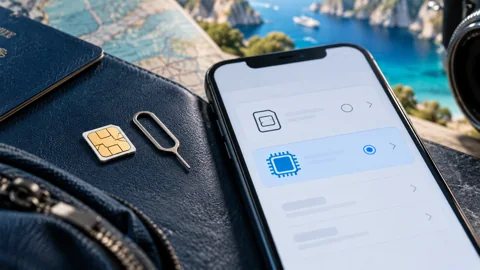
On iPhone, choose the intended Cellular Data line and review automatic data switching. Keep roaming instructions for the travel and home lines separate. Android manufacturers provide similar line-selection controls, although menus differ by device.
App-based messages generally use whichever working internet connection is available. Conventional SMS verification is different: it is associated with a voice-capable cellular service, and data-only profiles should not be assumed to receive it.
Before departure, identify the apps and accounts that might require the original number. Bank codes, voicemail and traditional domestic calls do not necessarily travel over the new data profile. Depending on the home carrier, receiving an SMS may be included while answering a call may be chargeable; verify the actual terms. Do not turn off a line needed for security verification without preparing alternative authentication methods. Conversely, an active home line is not required for every tourist. People who only use internet messaging can choose a simpler setup if they are comfortable without conventional calling.

Which Border Crossings Create Roaming Surprises?
An eSIM vs international plan review must use the actual territorial itinerary. A regional Europe package may not include Switzerland, Andorra or a Balkan stop even when the trip feels geographically continuous. Hong Kong, Macau and mainland China also require separate listing checks on many products.
A daily roaming pass might include some neighboring countries under one agreement, while a regional eSIM could define its own list. Neither coverage set is determined solely by the destination's continent. Map every country and island before choosing the package.
Do not assume service remains continuous on ferries, trains in tunnels or cruise ships offshore. Maritime mobile systems may have separate pricing from both ordinary travel eSIM data and terrestrial international roaming.
Coverage geography can be less obvious than it looks on a map. Gibraltar and nearby Spain, Jersey and the United Kingdom, and the two Virgin Islands territories have different arrangements despite their connections. The same caution applies to short ferry crossings and land borders where automatic network selection can pick a neighbor's tower. A regional product must show the actual destinations, not just a continent. When a vessel leaves shore, ordinary land roaming can give way to shipboard cellular service with different charging. Save vital information offline before moving between coverage zones.
What Should a Travel Connectivity Checklist Include?
Use an eSIM vs international plan checklist to avoid optimizing the wrong number. A package that saves $10 but leaves an essential SMS service unavailable is not a fair substitute. Evaluate these points in order:
- List all destinations and exact travel dates.
- Confirm whether your home subscription includes any international allowance.
- Estimate mobile data and identify voice/SMS requirements.
- Exclude products without verified geographic or device support.
- Calculate roaming triggers, top-ups and complete prepaid expenses.
- Review hotspot, high-speed restrictions and support options.
- Configure both SIM lines to avoid unwanted switching or charges.
The answer is not a universal winner: a suitable travel profile often offers transparent data budgeting, while existing roaming benefits can be the best purchase because you do not need to purchase anything new.
Complete the checklist before payment and repeat the network-setting check after landing. The correct mobile-data line should be selected, and automatic switching should be understood. If the connection is slow, test the documented high-speed policy before assuming the profile was installed incorrectly. If the phone shows No Service, check local coverage and compatibility rather than immediately purchasing another plan. Preserve original installation information and avoid deleting a profile until support confirms the reinstallation rules. Those steps can prevent both duplicate charges and a self-inflicted connectivity problem.
YOUR NUMBERS
Would an eSIM cost less than roaming?
Use the number of days your carrier would actually charge, including any fees.
Frequently Asked Questions About Travel Data and Roaming
An eSIM vs international plan FAQ should distinguish cost, technical roaming and number continuity. These are related but not interchangeable concepts. Check the following decisions before purchase.
Is a Travel eSIM Always Cheaper Than a Home Carrier?
No. An eSIM vs international plan comparison can favor your home subscription if international data is already included or a daily pass costs less for your stay. Compare total incremental charges, not advertised day rates alone. Confirm the country list.
Can I Use Both Services on One Phone?
Yes, an eSIM vs international plan setup can combine travel data and an active home number on a compatible dual-SIM device. Select the intended data line deliberately. The home line can still generate carrier charges.
Does a Prepaid Travel eSIM Stop All Roaming Fees?
No. In an eSIM vs international plan setup, prepaid data covers its own service, not activity on a separate home line. Incoming calls, voicemail or automatic switching may create charges. Review both accounts and settings.
Which Option Is Better for Two Days Abroad?
For a very short trip, the eSIM vs international plan comparison may favor an already-included allowance or a two-day carrier pass. A separate travel package may still be cheaper if home charges are high. Include activation convenience in the decision.
Is a Global eSIM the Same as International Roaming?
No. An eSIM vs international plan comparison distinguishes a purchased global package from your own carrier's roaming service. Both can rely on roaming agreements technically. Their billing, supported networks, call features and validity may differ.
My quick checklist
Tick off the checks you have completed. Your choices stay in this browser.
0 of 3 checked
Official device support
Menu names and availability can vary by device, software and market. Consult current manufacturer instructions for your exact model.