Key takeaways
- Port: supported land network
- At sea: separate service
- Review maritime roaming
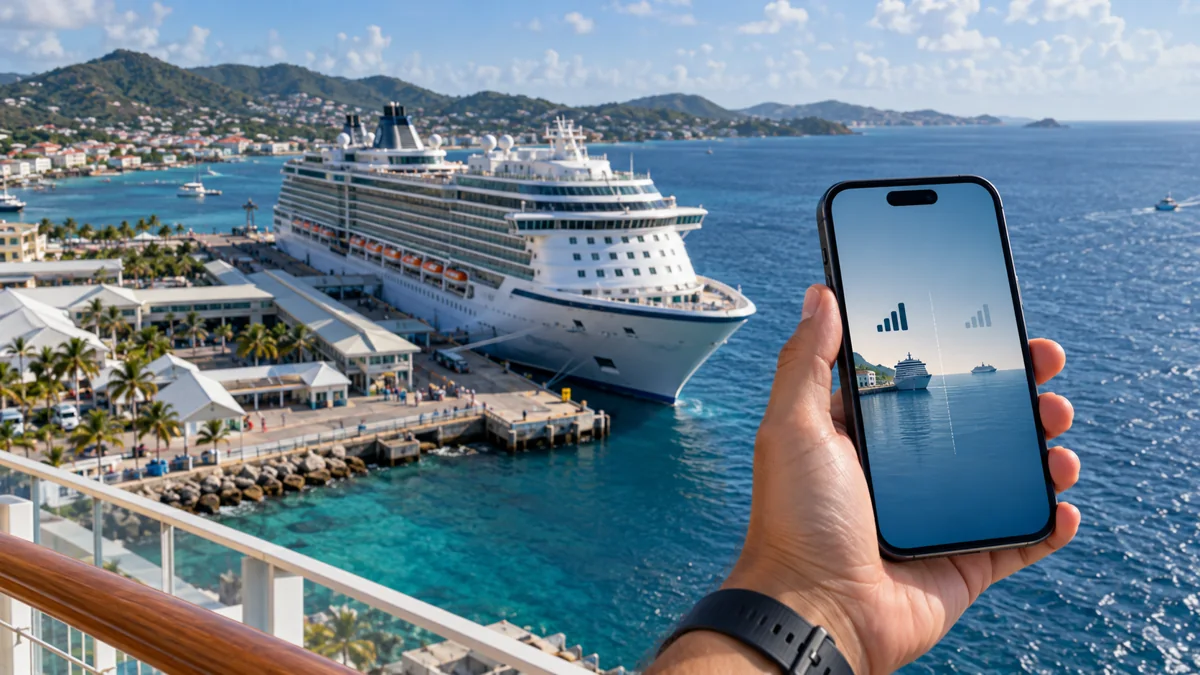
An eSIM for cruise ships is usually most useful during port stops on supported land-based networks, while open-sea connections require separate arrangements. A travel eSIM can provide mobile internet during cruise port visits when the ship or traveler is within range of a supported land-based cellular network. However, a normal country or regional eSIM generally does not include the ship's maritime cellular system in open water. This distinction explains why a phone may work in port but lose connection as the vessel sails away.
At sea, ordinary travel eSIM coverage, the ship's cellular network and onboard Wi-Fi are three different services. They can have different availability and pricing. Understanding which connection the phone is using helps avoid unexpected costs.
Why Does Mobile Service Change When a Cruise Ship Leaves Port?
An eSIM for cruise ships loses typical terrestrial coverage as the vessel moves offshore because land-based cellular towers do not cover the open ocean continuously. Land-based cellular networks cover populated coastal areas and some nearby waters, but they do not provide guaranteed reception across open ocean. As a vessel moves away from shore, the phone can lose the terrestrial network. Some ships offer an onboard cellular system connected through satellite infrastructure.
A shipboard cellular network is not necessarily included in a travel eSIM's country coverage. When a phone connects to that system, charges may be governed by the home carrier's maritime roaming arrangement. The cruise line's Wi-Fi service is a separate connection.
A traveler should never assume that unlimited data for a country means unlimited data at sea.
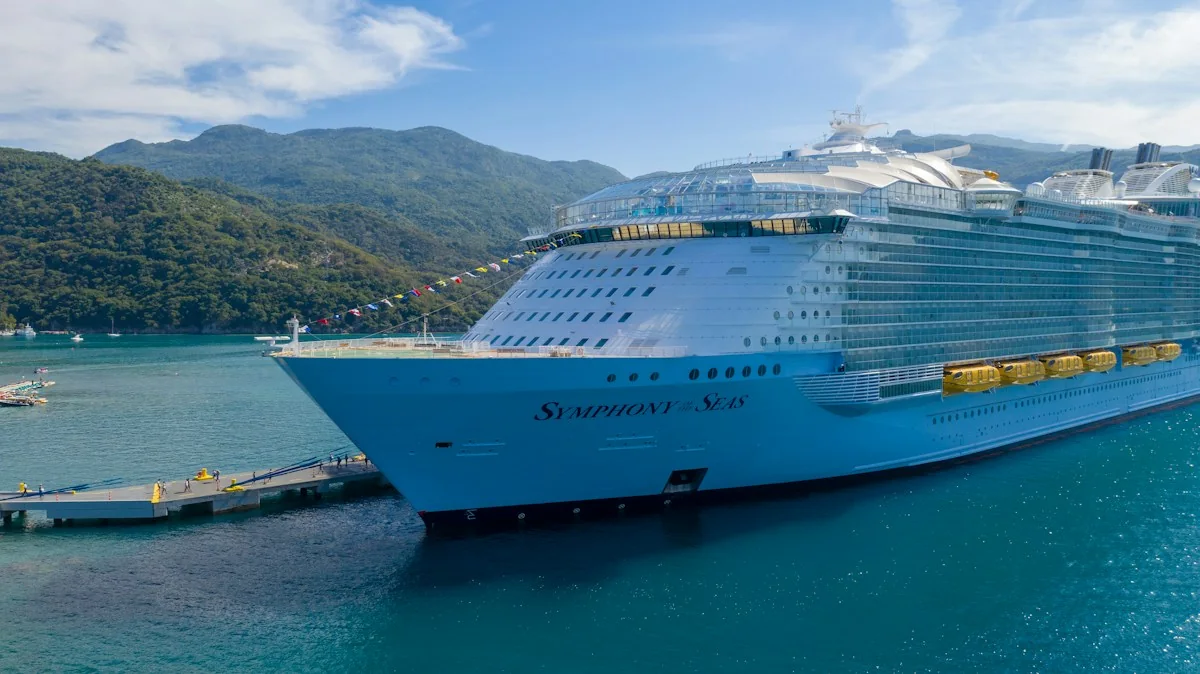
The ship's location determines which connection is practical. During a port visit, a passenger may reach a terrestrial tower and use a prepaid country allowance. Several miles offshore, the same tower may no longer provide usable reception, even when the vessel is visible from the coast. An onboard cellular system can use satellite backhaul and different billing arrangements from the travel-data package. The ship's separate Wi-Fi may also use satellite infrastructure. These systems should not be combined under a single vague label such as “cruise internet.” An eSIM for cruise ships should therefore be compared by the ports visited, while shipboard connectivity is budgeted separately.
Mobile Data vs Ship Wi-Fi vs Maritime Cellular
An eSIM for cruise ships handles supported ports, whereas ship Wi-Fi and maritime cellular roaming have separate networks and billing rules. These three connection types serve different situations. A travel eSIM is generally intended for supported mobile networks at destinations. Ship Wi-Fi is provided through the vessel's internet system, while maritime cellular service enables compatible phones to roam on an onboard network.
| Connection | Typical availability | Billing considerations |
|---|---|---|
| Country travel eSIM | In port and supported land areas | Included countries and plan terms |
| Regional eSIM | Supported countries on the itinerary | Territorial coverage and validity |
| Ship Wi-Fi | Where the cruise line offers it | Ship package and access rules |
| Maritime cellular roaming | On participating ships at sea | Home carrier's maritime rates |
| Public port Wi-Fi | Selected terminals and businesses | Access, security and reliability |
A travel eSIM may be the most convenient solution during port days. Ship Wi-Fi may be more appropriate for internet access at sea. Maritime cellular roaming should be understood separately because it can generate unexpected charges.
A simple charging scenario: a traveler has prepaid data for Italy but keeps a U.S. phone line enabled. While the ship is docked in an Italian port, the prepaid line may connect to an eligible Italian network. Once offshore, the phone could encounter the ship's maritime cellular network through a different line and potentially trigger separate roaming rates. The prepaid data purchase does not automatically protect the home subscription from those charges. The safest configuration depends on whether calls and messages need to remain reachable during the voyage.
Plan separately for land and sea
1Ports
Match each port to the plan’s destination coverage.
2At sea
Check the ship’s Wi-Fi options and separate pricing.
3Home line
Review roaming settings to avoid unintended charges.
4Before sailing
Save instructions and essential documents offline.
Can an eSIM for Cruise Ships Connect While Docked?
An eSIM for cruise ships may connect while docked if the port's country is included and a supported network reaches your location. Yes, a travel eSIM may connect when a supported land-based network is available. This can happen when the ship is docked in a covered port or when the passenger goes ashore. However, reception inside the vessel can differ from reception outdoors.
Some ships disable onboard cellular service near port, but passengers should not rely on every vessel behaving identically. Check which network the phone is actually using. If the travel eSIM does not cover the country, roaming through another line may still create charges.
Some itineraries list ports by tourism region rather than by their individual telecommunications jurisdiction. This is misleading when planning mobile coverage. Tortola is in the British Virgin Islands, while St. Thomas is in the U.S. Virgin Islands; one country-specific plan should not be assumed to cover both. The same principle applies to island territories with different mobile arrangements from nearby mainland countries. Make a list of every port and compare it with the provider's exact destination names before paying.
Choosing the right validity: do not buy solely according to the total length of the voyage. A person with two shore excursions and five uninterrupted sea days may need relatively little land-based data. Someone with daily port stops and frequent independent walking tours can justify a larger allowance. The most useful comparison combines the number of actual port hours, each territory's coverage and the volume of maps or uploads expected while ashore. This method avoids mistaking time on board for time connected to mobile towers.
What About Caribbean Cruises?
For Caribbean routes, choose an eSIM for cruise ships by checking each port territory separately, including the Bahamas and both Virgin Islands jurisdictions. A Caribbean cruise may visit several countries and territories that have separate eSIM destination listings. The Bahamas, Jamaica, Mexico, the U.S. Virgin Islands and the British Virgin Islands are examples of locations with different network arrangements. A Caribbean regional package should not be assumed to cover every stop.
Review the exact itinerary, including ports and overnight stays. Compare a regional plan with separate national packages when the country list is incomplete. A ship's maritime connection remains outside ordinary country coverage unless explicitly included in a specialized product.
When checking Mediterranean routes, pay attention to short non-EU stops between EU ports. A trip may include Italy, Greece and a destination with separate roaming arrangements. European roaming rights can be relevant for eligible subscriptions while connected to participating terrestrial networks, but those rules should not be extrapolated to satellite-backed shipboard systems. A regional prepaid product has its own country list regardless of broader regulatory rules. The relevant question is always which network the phone is using at that moment.
What About Mediterranean Cruises?
A Mediterranean eSIM for cruise ships must explicitly cover EU and non-EU stops; EU land roaming rules do not guarantee satellite maritime service. Mediterranean itineraries frequently combine EU and non-EU destinations. A regional Europe eSIM may cover France, Italy and Greece but omit certain neighboring countries or microstates. This makes checking the destination list particularly important.
EU roaming benefits for eligible subscriptions do not automatically cover satellite-backed maritime cellular systems. A passenger could have suitable mobile data in an Italian port but face a different charging arrangement at sea. The phone's actual network matters.
Before departure, make a device checklist: save the itinerary and relevant package instructions offline, check the home carrier's maritime rates, and confirm whether the cruise company provides Wi-Fi. On sailing days, many travelers disable cellular connectivity with Airplane Mode and separately enable Wi-Fi. When visiting a port, re-enable the intended cellular line if the destination is supported. Confirm the network before relying on mobile data. If voice accessibility is essential at sea, consult the home carrier about the specific ship rather than assuming an ordinary country package works.
How Can You Avoid Unexpected Cruise Roaming Charges?
To avoid charges with an eSIM for cruise ships, use the intended travel line ashore and disable unwanted cellular connections at sea, often using Airplane Mode plus Wi-Fi. The most predictable approach is to use ship Wi-Fi when at sea and a suitable travel eSIM where supported on land. Many travelers keep Airplane Mode enabled at sea and turn Wi-Fi back on to connect to the ship's network. This prevents ordinary cellular connections while still allowing Wi-Fi use.
If you intentionally want maritime cellular service, consult your home carrier's cruise rates and verify that the specific ship is supported. Do not enable expensive roaming without understanding how it is billed. Cruise-specific cellular packages are different from country travel data packages.
A practical setup sequence is to prepare the travel eSIM before departure, review each port's coverage and configure phone settings before sailing. At sea, avoid unwanted cellular network connections. In port, enable the intended travel eSIM when appropriate and confirm the selected network.
Wi-Fi Calling can be useful when technically supported, but it does not eliminate contractual charges in every case. Calls over ship Wi-Fi may still be charged according to the carrier's Wi-Fi Calling terms and the destination dialed. The vessel's internet package can also restrict applications or performance. Make an important call only after confirming both the calling tariff and the connection. Internet messaging may be a simpler alternative for routine family communication, but some applications are unavailable or restricted in certain locations.
Can You Use Wi-Fi Calling on a Cruise?
Wi-Fi Calling is not guaranteed by an eSIM for cruise ships; it depends on home-carrier rules, the ship's network and supported calling services. Wi-Fi Calling may work through a suitable internet connection when the phone, carrier and service conditions permit it. However, availability on ship Wi-Fi can vary. Calls may also be billed under the home carrier's Wi-Fi Calling rules.
Travelers should not assume that Wi-Fi Calling is free for every number or destination. Internet messaging and video-call apps may be alternatives, subject to the ship's internet conditions. Verify the relevant services before relying on them.
A cost comparison should divide days into time at sea and time ashore. For instance, a seven-night cruise with three full port days may need only a small amount of land-based mobile data, even if passengers use onboard Wi-Fi every evening. Purchasing a large country allowance for all seven nights can be unnecessary. Conversely, a port-intensive itinerary with full-day excursions may benefit from a suitable regional package. Compare travel-data purchases with the separate cost of the ship's internet service; do not mix their allowances.
Is an eSIM for Cruise Ships Worth Buying?
An eSIM for cruise ships is worth buying when you need independent mobile data in several ports, not because you expect ordinary data offshore. A travel eSIM is often worth comparing when the itinerary includes multiple port days and the passenger wants independent internet access ashore. It may reduce reliance on public Wi-Fi and simplify navigation at destinations. However, it is not a replacement for onboard internet during days at sea.
The best value depends on the number of ports, countries, travel days and expected usage. A short cruise with one port may need less data than a two-week voyage with frequent land excursions. Compare the complete itinerary rather than the ship's departure country alone.
Mobile reception can also be weaker inside the ship because metal structures, interior cabins and distance from land affect signal. Walking ashore may improve access to a supported terrestrial network, but it is still not guaranteed in remote ports. Download shore-excursion tickets and transport details before leaving the vessel. If the group separates, consider whether each person requires independent data rather than relying on one shared hotspot. A working connection at the departure port says little about offshore coverage.
What Should a Cruise Data Comparison Include?
Compare an eSIM for cruise ships by port destinations, duration and data use while keeping maritime internet purchases entirely separate. A useful comparison should show the countries covered and distinguish land-based service from onboard connectivity. It should also indicate validity, data allowance and whether hotspot use is permitted. Any claim of at-sea coverage should require specific verification.
The central rule is simple: buy the travel eSIM for the countries you will visit, and plan ship connectivity separately.
A Port-by-Port Connectivity Checklist
For an eSIM for cruise ships, list every stop, its country or territory and the hours you will actually spend ashore. Confirm that the package includes those jurisdictions, then use ship Wi-Fi or another separately purchased service when offshore. Ports in the British and U.S. Virgin Islands count as distinct telecommunications territories even when they are close together.
If the cruise line offers more than one internet package, compare the intended application access and device limitations. Some passengers need only occasional messaging, while others plan video meetings or streaming. These shipboard conditions cannot be inferred from a travel mobile subscription. In addition, airplane-mode settings may differ in how Wi-Fi is re-enabled, so verify the phone's actual state before leaving it unattended. Keeping cellular disabled offshore is a useful precaution when the home carrier has costly maritime rates.
Frequently Asked Questions
These answers explain where an eSIM for cruise ships works, how to control roaming and when ship Wi-Fi is necessary.
Does an eSIM work in the middle of the ocean?
An eSIM for cruise ships generally does not provide open-ocean internet because it relies on terrestrial partner networks. An ordinary country travel eSIM generally relies on land-based networks and does not guarantee open-ocean service. Maritime cellular systems and ship Wi-Fi are separate services.
Can I use an eSIM when the cruise ship is in port?
An eSIM for cruise ships may work in port when supported cellular service is available, although the ship's structure can weaken reception. Yes, if a supported land-based network is available and the destination is included in the package. Actual reception depends on location.
Does a Caribbean eSIM cover all cruise stops?
A Caribbean eSIM for cruise ships covers only the named territories; one regional label does not guarantee every island stop. Not necessarily. Caribbean regional products have different territory lists. Check every port individually.
Does Airplane Mode stop cellular roaming charges?
Airplane Mode prevents ordinary cellular network connections while it is active, so an eSIM for cruise ships does not accidentally trigger roaming via a home line. Airplane Mode generally disables cellular radios while active. Wi-Fi can then be re-enabled separately if supported. Check the device settings before using ship internet.
Is ship Wi-Fi included in a travel eSIM?
Ship Wi-Fi is normally separate from an eSIM for cruise ships and follows the cruise line's own internet terms. Generally not. Cruise Wi-Fi is a separate service offered by the cruise line. Do not assume it is included in a country data package.
My quick checklist
Tick off the checks you have completed. Your choices stay in this browser.
0 of 3 checked
Official device support
Menu names and availability can vary by device, software and market. Consult current manufacturer instructions for your exact model.