Key takeaways
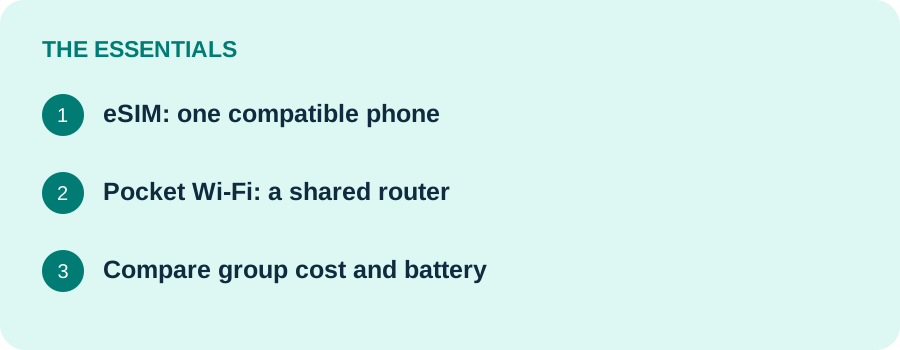
- eSIM: one compatible phone
- Pocket Wi-Fi: a shared router
- Compare group cost and battery
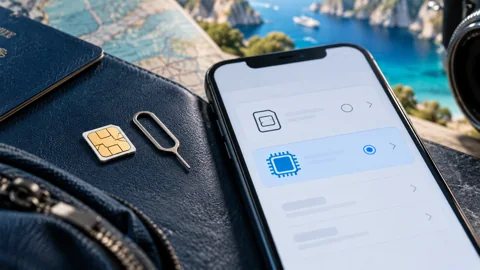
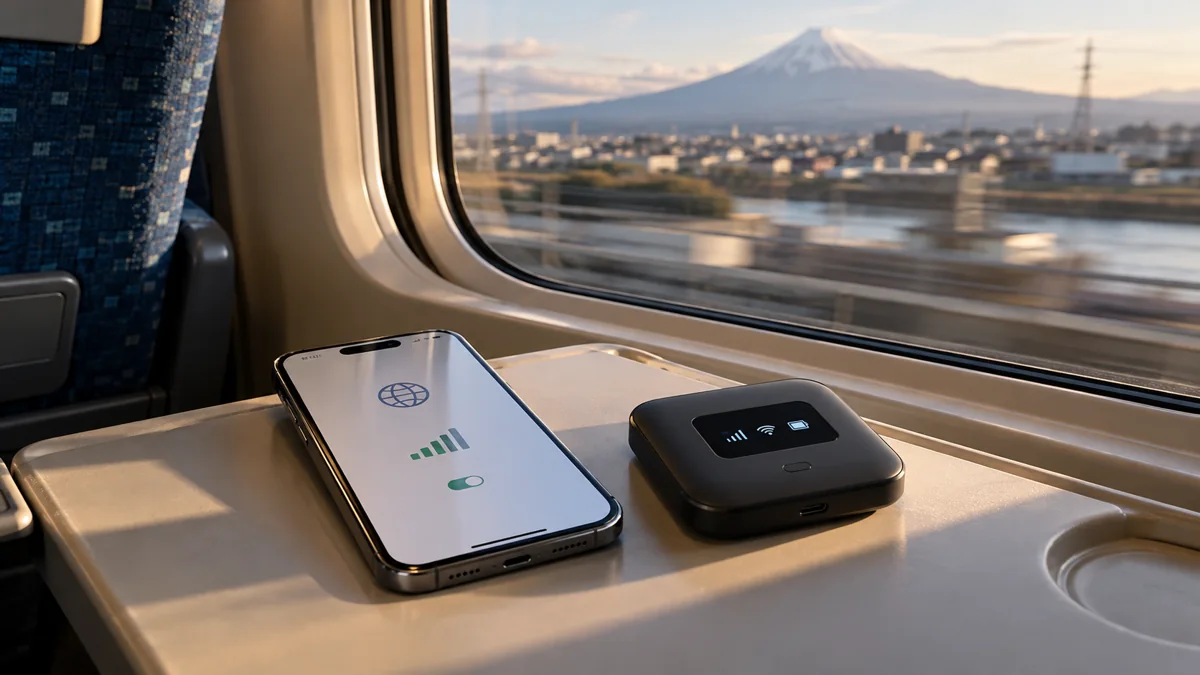
The eSIM vs pocket WiFi Japan decision depends on whether you travel alone, share internet with others, own a compatible unlocked phone and want to carry an extra device. A travel eSIM connects directly through a supported Japanese cellular network. Pocket Wi-Fi uses a separate battery-powered router that shares its own cellular connection over Wi-Fi.
Neither connection type is inherently faster or guaranteed to work in every part of Japan. The actual network partner and location determine reception. For one traveler, avoiding rental equipment is often convenient; for a group staying together, a shared router may provide useful value.
What Is the Main eSIM vs Pocket WiFi Japan Difference?
In an eSIM vs pocket WiFi Japan comparison, the direct phone connection is the main practical distinction. A compatible smartphone with a travel eSIM needs no external router, while pocket Wi-Fi is an additional device that must be charged, carried and usually returned after rental.
| Feature | Travel eSIM | Pocket Wi-Fi router |
|---|---|---|
| Main connection | Phone cellular profile | Separate router cellular profile |
| Equipment | Compatible unlocked phone | Rental or purchased portable router |
| Group access | Phone hotspot if permitted | Multiple nearby Wi-Fi devices |
| Power | Uses phone battery | Requires router battery |
| Pickup and return | Usually no physical return | Often specified by rental terms |
| Local mobile network | Product-dependent | Router-product-dependent |
| Regular phone number | Often absent on data-only plans | Usually not provided by router |
| When group separates | Independent with own profiles | People away from router lose its Wi-Fi |
Japan's national tourism organization recognizes travel SIMs, eSIMs and rental pocket Wi-Fi as visitor connectivity options. The best product varies with trip length and logistics, not merely technology.
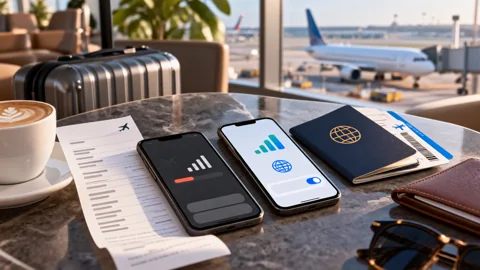
A phone's embedded profile is not a portable Wi-Fi router in itself. The traveler uses the phone's own apps directly, and extra devices can connect only when hotspot sharing is supported. A rented router creates its own nearby Wi-Fi network, but that connection disappears for anybody who moves out of range. Both technologies eventually rely on cellular infrastructure. This distinction matters when planning independent sightseeing, family arrangements and emergency contact. A device may display a Wi-Fi connection while the router has lost its cellular uplink, so the presence of Wi-Fi bars is not proof that the internet is actually available. Before choosing, decide whether the goal is connectivity for one phone or a small moving group.
Which Connection Works Best for a Solo Traveler?
For solo travel, an eSIM vs pocket WiFi Japan comparison often favors the digital SIM when the phone is compatible, unlocked and the plan offers suitable coverage. It avoids a second item to carry and a rental return deadline. Mobile internet becomes available directly on the phone once the service connects.
A router can still be useful if the phone is locked to another carrier or lacks eSIM support. It can also connect a Wi-Fi-only laptop or tablet without requiring the phone's own hotspot feature. The extra device is a trade-off rather than an automatic disadvantage.
For a person visiting Tokyo and Kyoto who only needs maps and messaging, one suitable data profile may be enough. Check the actual purchase price and allowance before deciding.
For a solo traveler, removing the extra rental device can mean fewer cables, less weight and one fewer return deadline. An eligible phone can handle translation, train planning and restaurant booking without a router nearby. The trade-off is dependence on that phone's battery and eSIM compatibility. Someone using a carrier-locked or older handset may find that pocket Wi-Fi is the practical option, particularly when a laptop must also connect. A digital profile does not magically unlock a device. Check the exact model and network bands ahead of departure. The ideal option is the least cumbersome setup that actually works with the hardware already owned.
Your phone or a shared router?
Travel eSIM
- Connection stays with each compatible phone.
- No separate rental device to collect or return.
Pocket Wi-Fi
- Can share one connection among nearby travelers.
- Requires charging, collection/return and checking the rental terms.
Which Setup Is More Practical for Families?
For a family, the eSIM vs pocket WiFi Japan decision hinges on whether everybody stays within the router's Wi-Fi range. A shared router can connect several devices while the group travels together. But if family members separate to shop, hike or take different trains, people without the router may lose internet.
Independent travel eSIMs give each eligible phone its own connection, potentially increasing cost but improving flexibility. A router can reduce package count, yet all users share its mobile bandwidth and allowance. Device limits and fair-use terms must be checked.
A practical hybrid approach can use a router for shared work and one independent phone connection for navigation. This should be compared with the cost of several standalone eSIMs.
Families should discuss how often they expect to separate. One parent may visit a museum while another takes the children to a different attraction. A single router cannot provide internet simultaneously to people far apart. Independent profiles increase flexibility but may raise total cost. It is also worth checking whether a child's device can use eSIM or only Wi-Fi. A mixed solution can combine one shared router for accommodation and travel with an individual mobile line for the person who manages tickets and navigation. The best setup should survive an ordinary day in which group members split up, not just a theoretical scenario in which everyone remains together.
Is a Router Cheaper for Two or Four People?
An eSIM vs pocket WiFi Japan cost comparison should add the full router rental, optional insurance, delivery or pickup expenses and any return fees. For digital profiles, add the cost of suitable data packages for each traveler who needs an independent connection. Do not compare one person's eSIM against a router shared by four without accounting for the different services.
For illustration, a router costing a hypothetical $7 per day over ten days totals $70 before extras. A hypothetical $22 eSIM for each of four people costs $88. The router could cost less if everybody stays together, but it may not work for group members who separate.
| Situation | Practical starting point |
|---|---|
| One traveler, unlocked eSIM phone | Compare individual eSIM first |
| Two people who stay together | Compare two eSIMs with router rental |
| Four travelers who separate | Independent connections |
| Laptop-heavy traveler | Hotspot-enabled plan vs router |
| Incompatible or locked phone | Router or eligible alternative |
| Arrival and departure at different airports | Check router return logistics |
These figures are hypothetical and should never be displayed as current rental quotes. Use live product prices to produce a financial recommendation.
The rental calculation should include all compulsory charges, not simply the daily headline rate. Delivery, pickup, optional damage protection and late returns can materially affect the total. A digital plan requires its own complete comparison, including any top-ups and the number of people who need separate connections. Group prices are only meaningful when each option provides the necessary independence. A shared router may be cheaper for four people sitting together but poor value when everyone follows a different schedule. Show the assumptions of any calculator and let users change the group size and number of independent connections. Never hardcode an illustrative price as a current Japanese market quotation.
Does Either Device Offer Better Mobile Coverage?
The eSIM vs pocket WiFi Japan choice does not determine coverage by itself. Both use Japanese cellular networks, which vary by operator, location, device bands and congestion. A specific router may support a different operator from a selected international travel eSIM.
In central Tokyo, Osaka or Kyoto, both products may provide suitable connectivity where their supported networks operate. In Hokkaido, the Japanese Alps or remote coastal regions, the exact operator becomes more important. Download offline maps before long rural journeys.
Train tunnels, underground facilities and difficult terrain can interrupt either device. A pocket router is not a signal booster that creates mobile coverage where none exists.
Product-specific operator information is essential in both categories. An international digital plan and a particular rental router may connect through different Japanese networks, which can produce different results in a given region. A 5G-capable router is not superior if it cannot access the available network at a mountain lodge. Likewise, an eSIM with a 5G badge may operate on LTE for much of a rural itinerary. Check actual partner coverage in Hokkaido, mountain valleys and coastal communities. Underground rail platforms and tunnels can temporarily interrupt either connection. No setup should be advertised as guaranteed nationwide internet without a documented basis and reasonable caveats.
Find the right eSIM for your trip
Compare prices, coverage, data allowances and validity in one place. Choose a plan that fits your journey, not just the lowest advertised price.
How Do Battery Life and Charging Compare?
An eSIM vs pocket WiFi Japan setup uses batteries differently. The eSIM consumes power through the phone's normal cellular radio, while a router has its own battery and charging cable. The router can preserve some phone hotspot usage, but it adds another device to maintain.
Heavy hotspot use from a phone can drain its battery more quickly, depending on connected devices and signal conditions. A router can be useful for sustained sharing, yet its battery may run out mid-day. Battery life claims depend on device model and activity.
Carry suitable charging equipment for either option. For a group using a router, agree on who will keep it charged and who carries it throughout the day.
Battery planning becomes more important during full-day sightseeing and long Shinkansen transfers. A separate router can keep the phone from performing hotspot duty, but the traveler must charge and carry two devices. The router battery may decline faster when many devices remain connected or when signal is weak. A phone used as a hotspot can also drain quickly under similar conditions. Test the chosen setup before an important travel day. Carry a compatible charger or power bank when permitted and make sure the equipment can be charged in your accommodation. A technically excellent data plan is inconvenient if the device providing it runs out of power at midday.
How much data should you plan for?
A simple planning estimate, based on your own expected use.
How Do Airport Pickup and Return Affect a Router Rental?
An eSIM vs pocket WiFi Japan rental decision should consider the entire pickup and return process. Pocket routers can often be reserved online, collected from an airport or delivered to accommodation, depending on the service. Return deadlines and locations are contractual conditions.
Arriving at Narita and departing from Kansai can complicate a rental if the service requires a particular return point. A digital eSIM does not need to be physically returned. However, it still needs correct installation and activation timing.
Japan's official visitor guidance recognizes airport and advance reservation options. Travelers should verify current inventory, delivery arrangements and the exact return deadline before paying.
A rental pickup process can save or waste time depending on opening hours and arrival conditions. After a long flight, a traveler may have to locate a service desk, present a reservation and check equipment before leaving the airport. Hotel delivery can be convenient but requires confirmation of the address and timing. The return process matters just as much, especially when the arrival and departure airports differ. A digital profile can avoid the physical logistics, although it still needs compatible hardware and correct activation. Compare rental convenience using the real route instead of assuming that every airport counter is open around the clock.
Can an eSIM Phone Hotspot Replace a Portable Router?
Yes, an eSIM vs pocket WiFi Japan decision can favor a phone hotspot if the travel tariff expressly permits tethering. The phone shares its cellular connection with a laptop or another device. This can reduce the need to rent additional equipment.
But an unlimited-style travel package may impose tethering restrictions or high-speed limits. Connected laptops can also download large updates and consume data unexpectedly. Check hotspot permissions before treating it as a router replacement.
A phone hotspot may be ideal for occasional email, while sustained multi-device video meetings may favor a separately powered connection. Actual network quality remains important in both cases.
Before using a phone as the primary internet source for a laptop, check that the mobile package allows tethering. Unlimited-style offers can still have high-speed thresholds or separate restrictions on hotspot usage. A laptop may download operating system updates or synchronize large files without obvious user action. Setting the Wi-Fi connection as metered where supported can reduce unintended consumption. The phone may need to remain near the receiving device and could become warmer or drain battery faster. A pocket router handles sharing as its core task, but that alone does not make the connection faster. Compare the practical device load and expected data budget.
What Makes Sense for a Two-Week Trip?
For a two-week holiday, the eSIM vs pocket WiFi Japan answer depends on the daily itinerary, device count and amount of independent movement. A solo visitor with a supported unlocked phone can start by comparing fixed-data and long-validity eSIM offers. A family that spends each day together can compare the full rental cost of a suitable shared router.
Check local network coverage at rural destinations, whether a package permits hotspot sharing, and the router's battery and return requirements. If all four travelers need separate navigation throughout the day, one shared router is unlikely to satisfy every need.
Buy the connection that matches how people actually move, not merely the cheapest package headline.
Two weeks in Japan can involve Tokyo, Kyoto, Osaka and smaller towns with very different daily connectivity demands. A solo sightseeing traveler may use relatively little data if maps are downloaded and hotel Wi-Fi is available. A photographer uploading large videos has a much higher requirement. Families should compare whether each member needs a reliable independent connection. A router may be convenient during group rail transfers, yet individual plans are more flexible for separate evening activities. Build a full-trip budget covering data, equipment, return obligations and charging accessories. Select verified local network access before paying more for a larger advertised allowance.
The final decision can be presented as a short checklist: Is every device compatible? Does anybody need an independent connection when the group separates? Is hotspot allowed? What is the total cost with required rental charges? Which local operator does each product use? How long does the battery last under expected usage? Where will equipment be returned? If one answer rules out a product, there is little value in continuing to compare its headline price. A credible travel comparison should also make room for a hybrid solution, especially when one traveler works remotely while others primarily use maps and messaging.
YOUR NUMBERS
Compare your group’s connection costs
Enter the full router quote and the eSIM cost for each traveler. Everyone sharing a router must stay within its reach.
Frequently Asked Questions About Japan Mobile Connectivity
An eSIM vs pocket WiFi Japan FAQ should answer which device makes sense for the traveler's situation. Both options are mainstream connectivity methods for visitors. Their value changes with group size and itinerary.
Which Connection Is Best for One Person?
For one person with a compatible phone, an eSIM vs pocket WiFi Japan comparison often favors eSIM convenience. No separate router or return process is needed. Check the data allowance and network first.
Does Pocket Wi-Fi Have a Stronger Signal?
Not inherently. An eSIM vs pocket WiFi Japan result depends on each product's local operator and equipment. One may outperform another in certain locations. Neither guarantees service in rural tunnels.
Can a Family Share One Travel eSIM?
Sometimes through an allowed phone hotspot, but an eSIM vs pocket WiFi Japan comparison should consider battery and tethering limits. A shared router is purpose-built for multiple nearby Wi-Fi devices. People who separate need independent connections.
Can I Collect a Router at a Japanese Airport?
Yes, rental pickup options are common, though individual providers vary. An eSIM vs pocket WiFi Japan purchase should also check return terms and opening hours. Advance reservations may be available.
Do I Need a Japanese Phone Number?
Not for ordinary internet browsing. An eSIM vs pocket WiFi Japan comparison involves connectivity, and many products in both categories do not provide conventional Japanese calls or SMS. Choose separate voice-capable service if required.
My quick checklist
Tick off the checks you have completed. Your choices stay in this browser.
0 of 3 checked
Official device support
Menu names and availability can vary by device, software and market. Consult current manufacturer instructions for your exact model.